
Bolivian Ball
photography by Eduardo Leal
Interview by Veronica Gorodetskaya
Some stories begin with a chance encounter. Portuguese photographer Eduardo Leal wasn’t looking to document American basketball players in Bolivia, but that’s exactly where he found himself in December of 2014. More than a decade later, despite geographic and cultural hurdles, Bolivia continues to attract American players driven by a love of the game or the promise of opportunity, however far-flung.
Drawn to people who live in unexpected places or exist just outside the margins, Eduardo has spent years following stories that explore displacement, belonging, and the quiet strength of those who persist.
We spoke with him about one such story—and the American players who followed basketball all the way to Bolivia’s highlands.
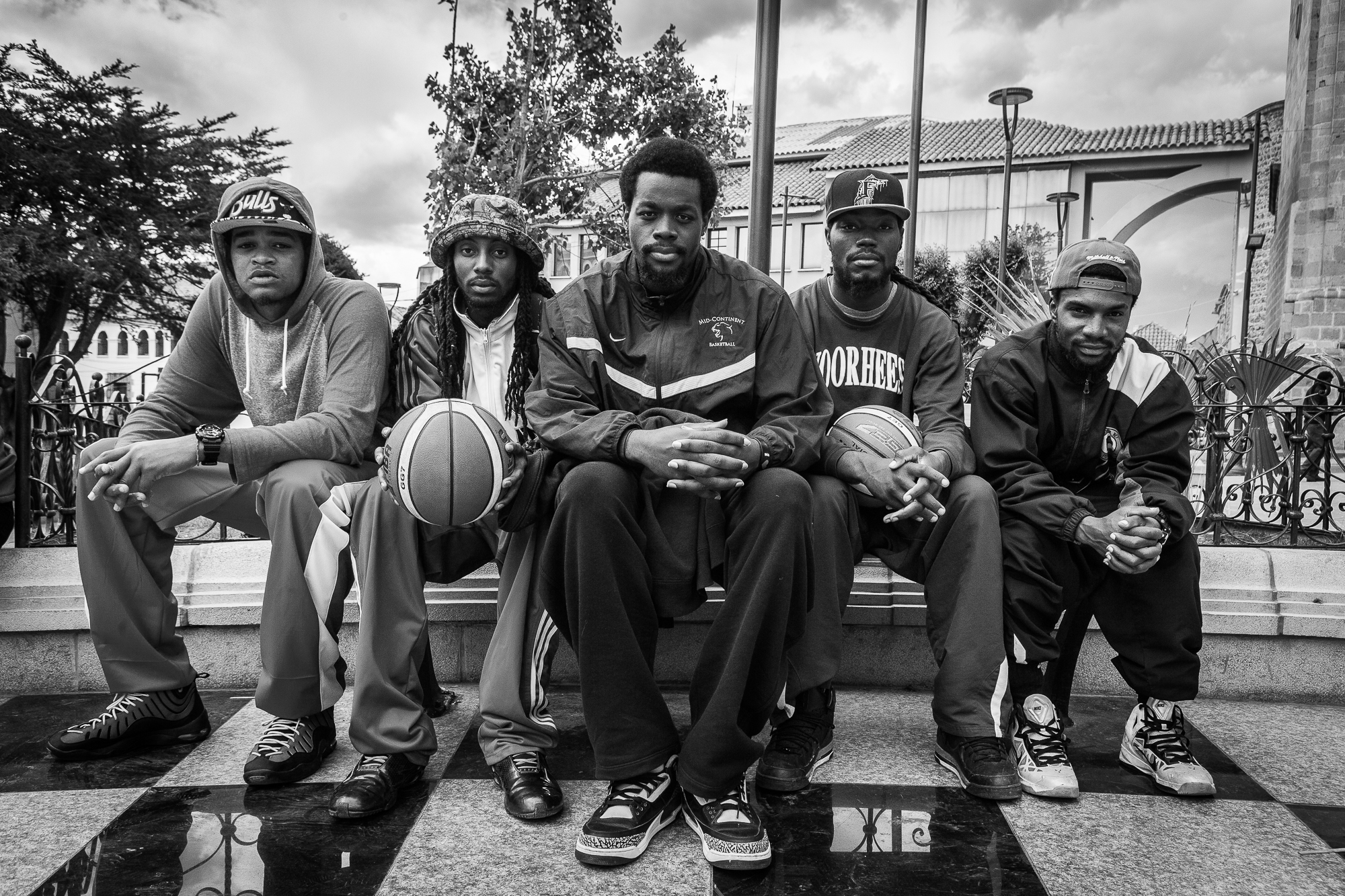
American basketball players sit in Plaza 10 de Noviembre, Potosí. From left to right: Rory Miller (25), Domonick Steverson (24), DeQuan Dupree (25), Travis Dupree (25), and Tadavious Williams (26).
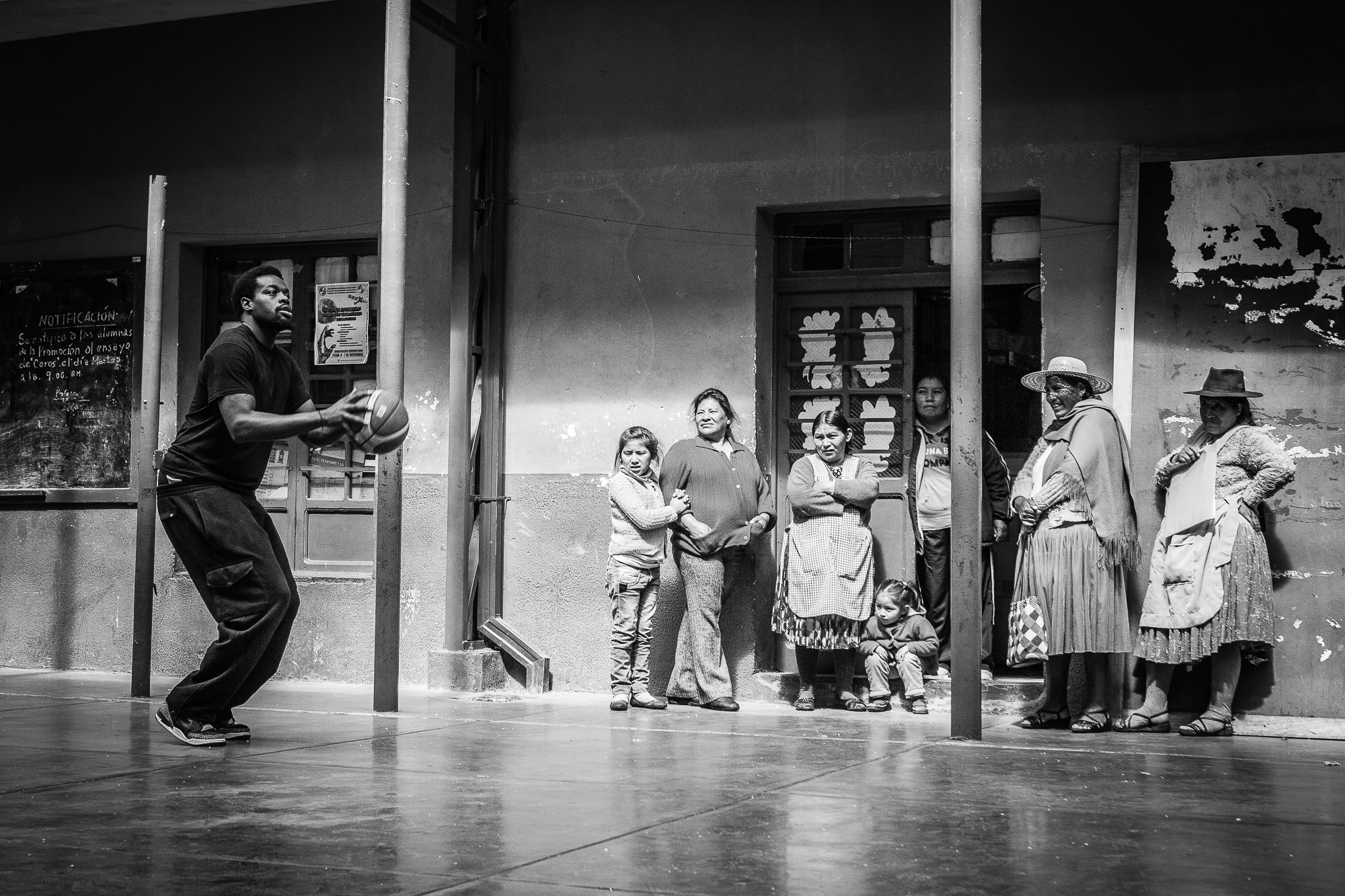
Cholitas look on with curiosity as DeQuan Massey shoots a three-pointer during a free session at Sucre School in Potosí.
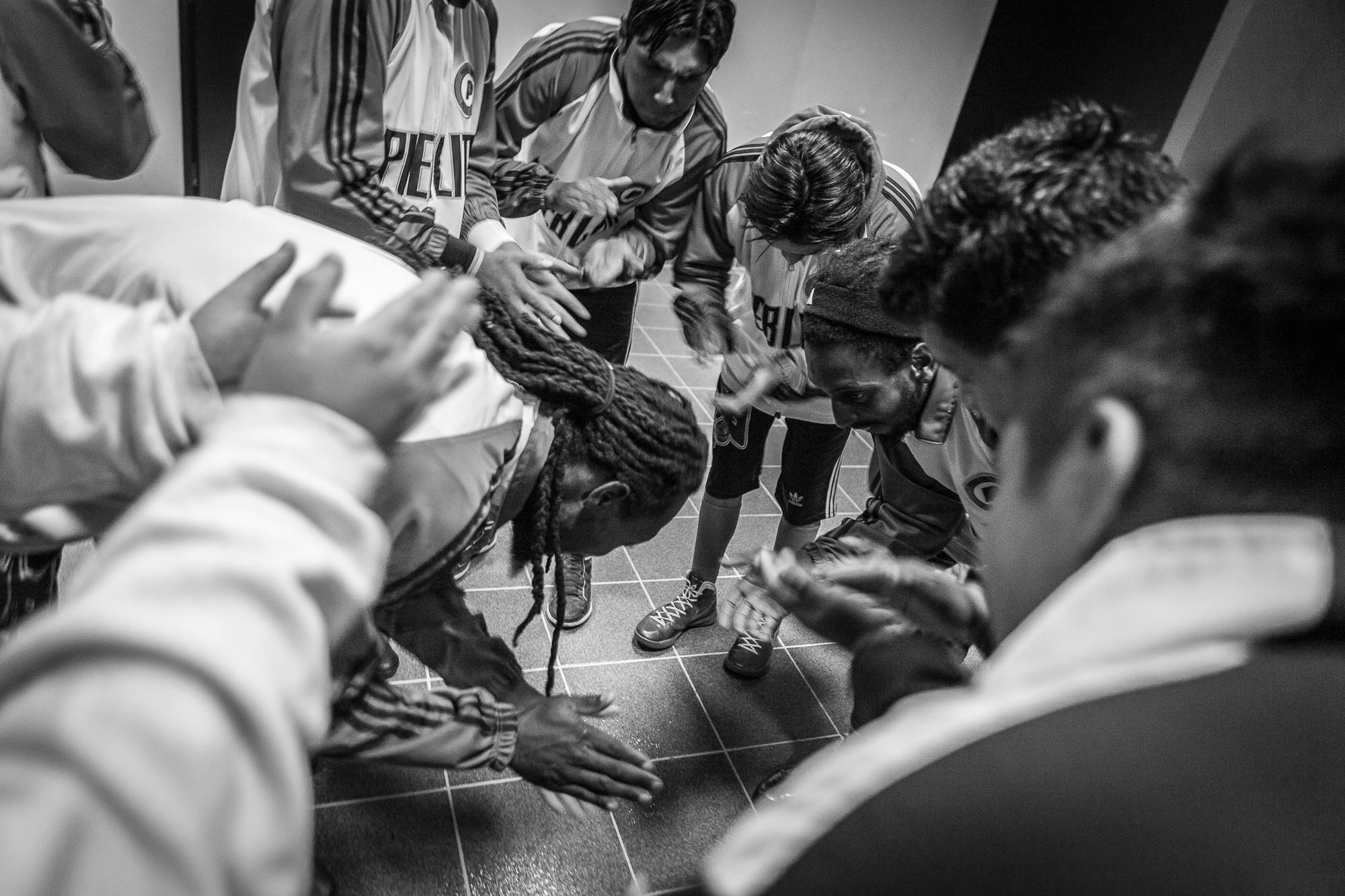
Travis Dupree leads the team in the Warriors chant before the game against Pichincha.
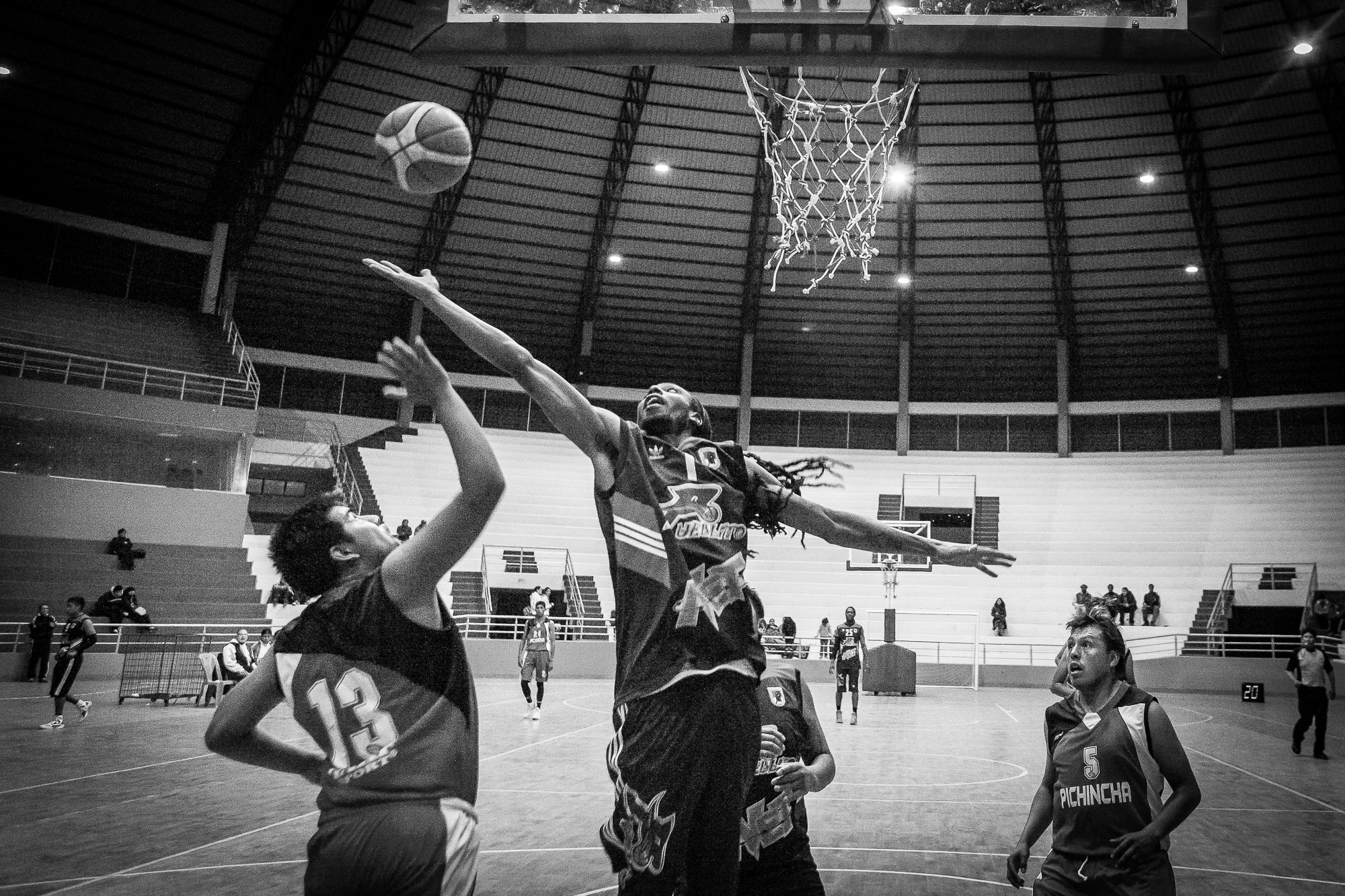
Domonick Steverson tries to recover the ball during the game against Pichincha. Pichincha is one of the top teams in Potosí, representing one of the most prestigious schools in the country.
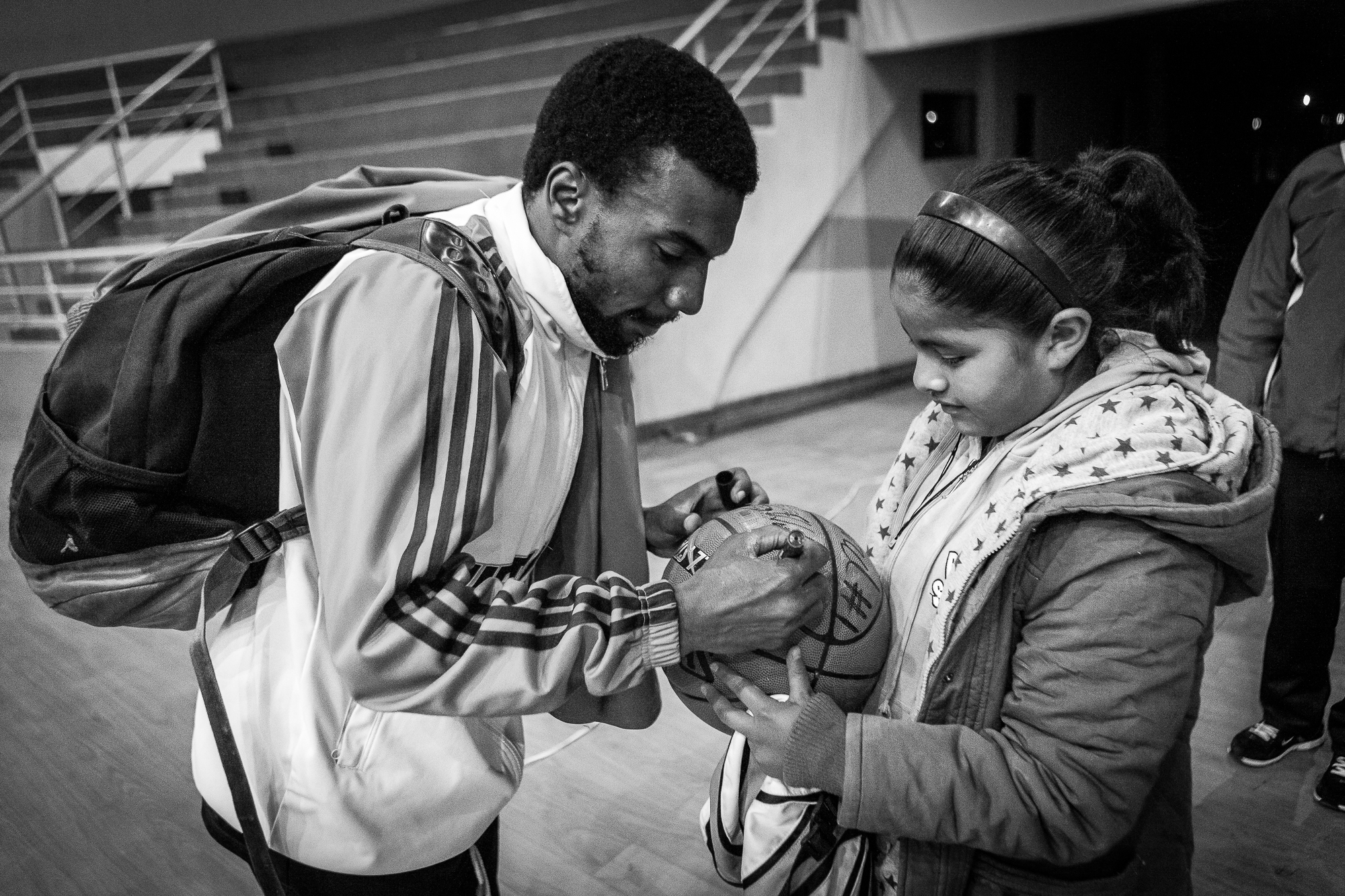
Tadavious Williams signs a fan’s ball after the game against Pichincha.
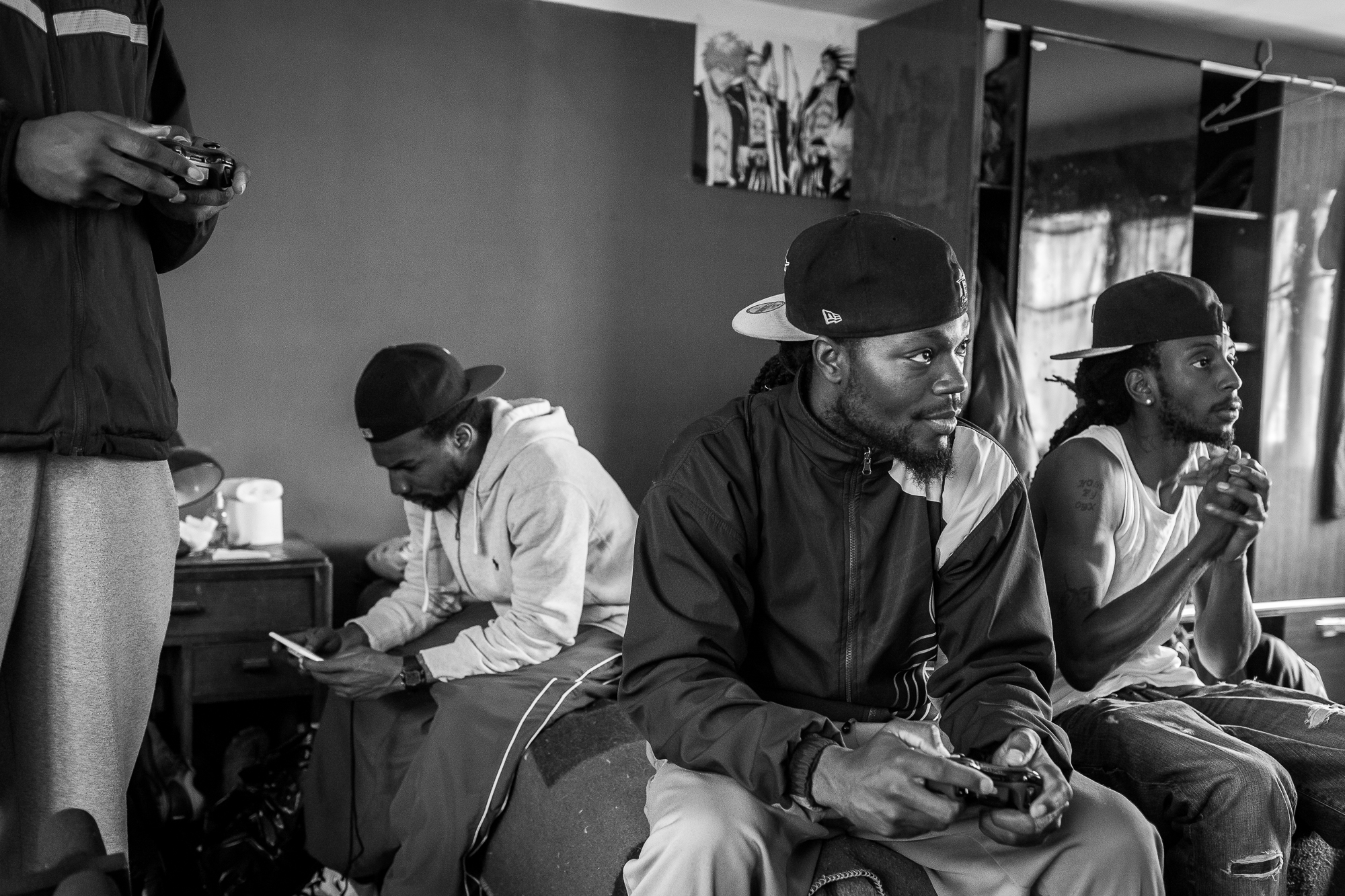
Players DeQuan Massey, Tadavious Williams, Travis Dupree, and Domonick Steverson relax in the afternoon playing video games.
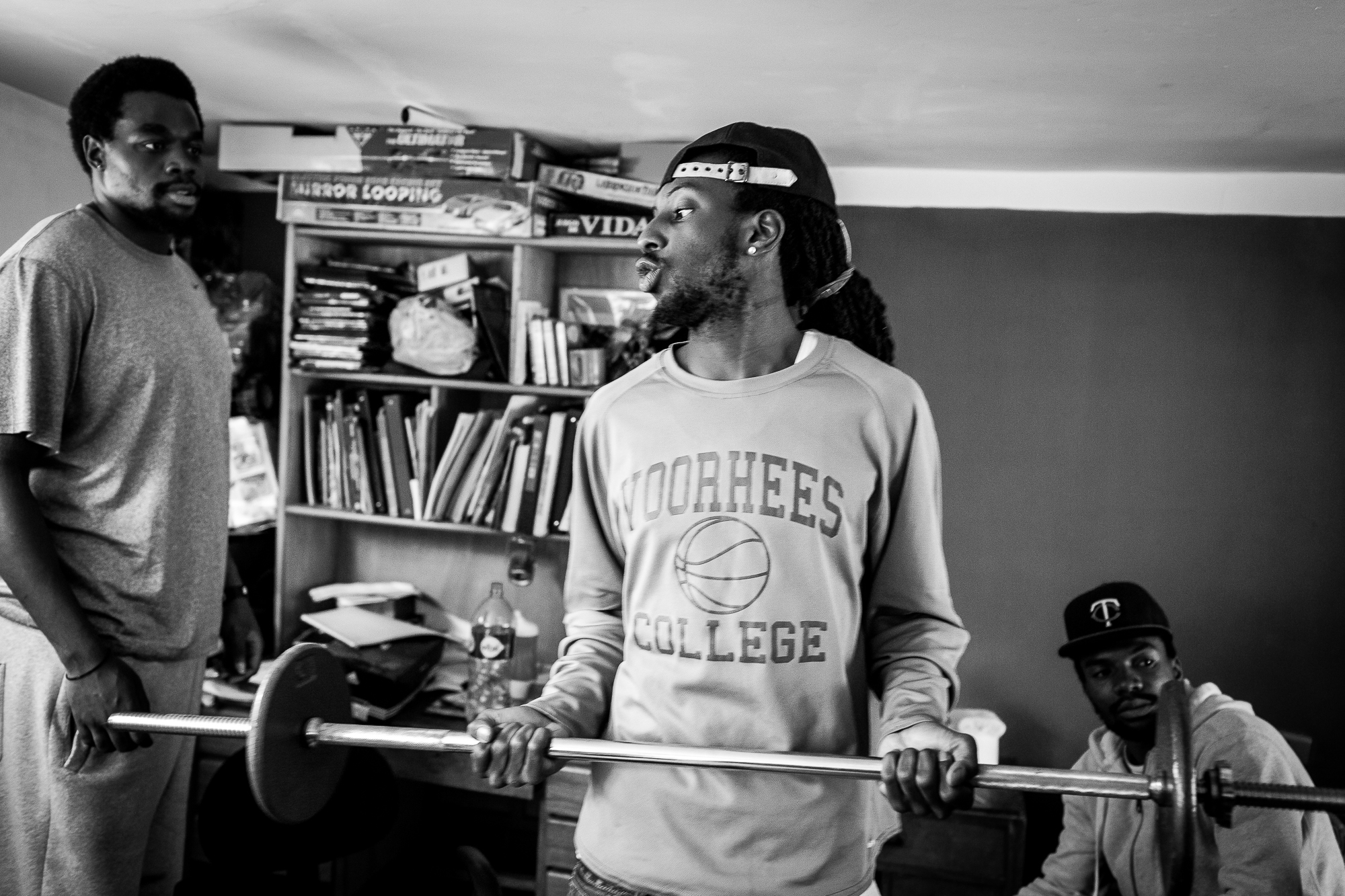
Domonick Steverson lifts weights as a penalty for losing a game of Street Fighter.
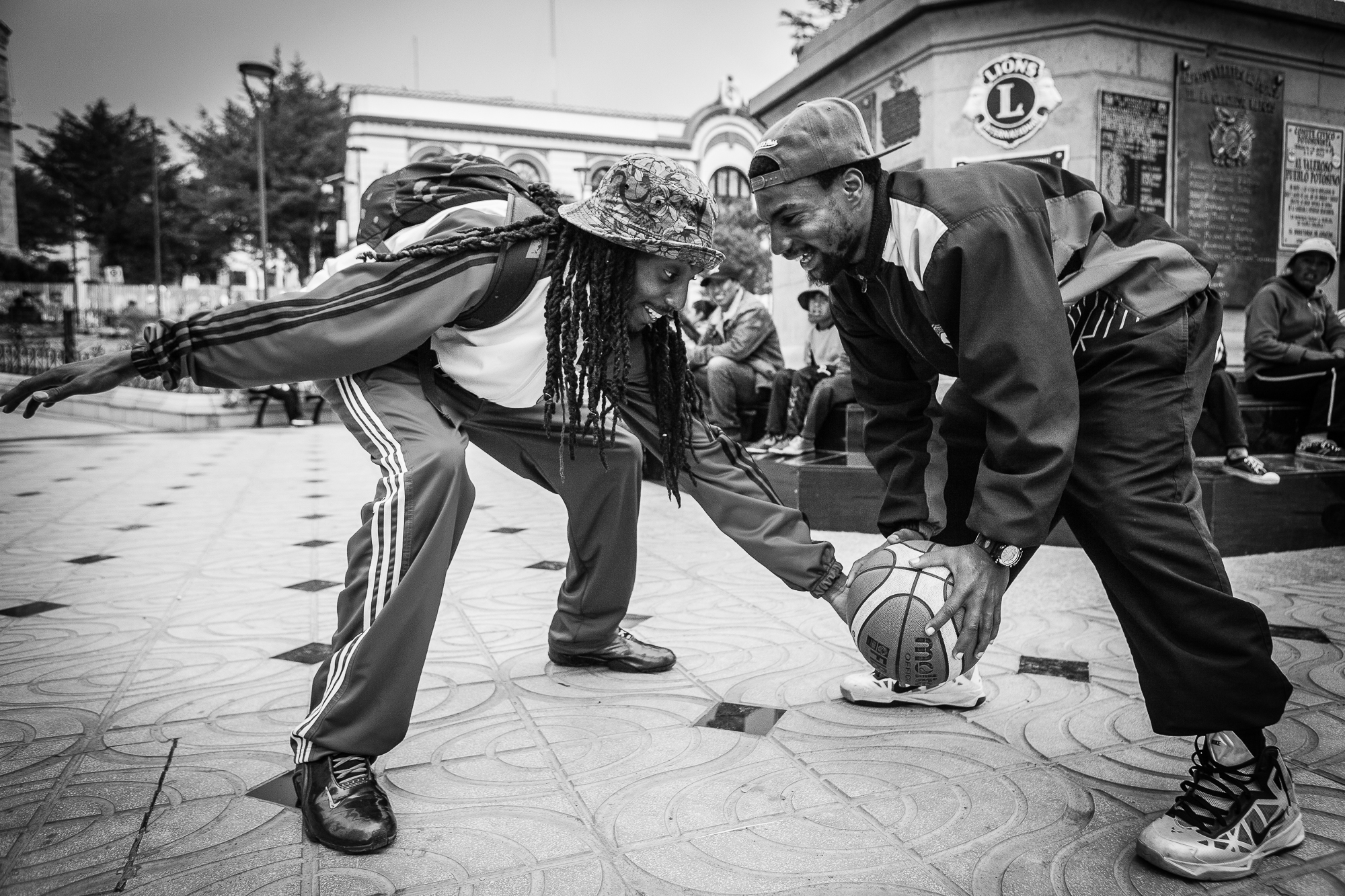
Domonick Steverson tries to steal the ball from Tadavious Williams while they play at Plaza 10 de Noviembre in central Potosí.
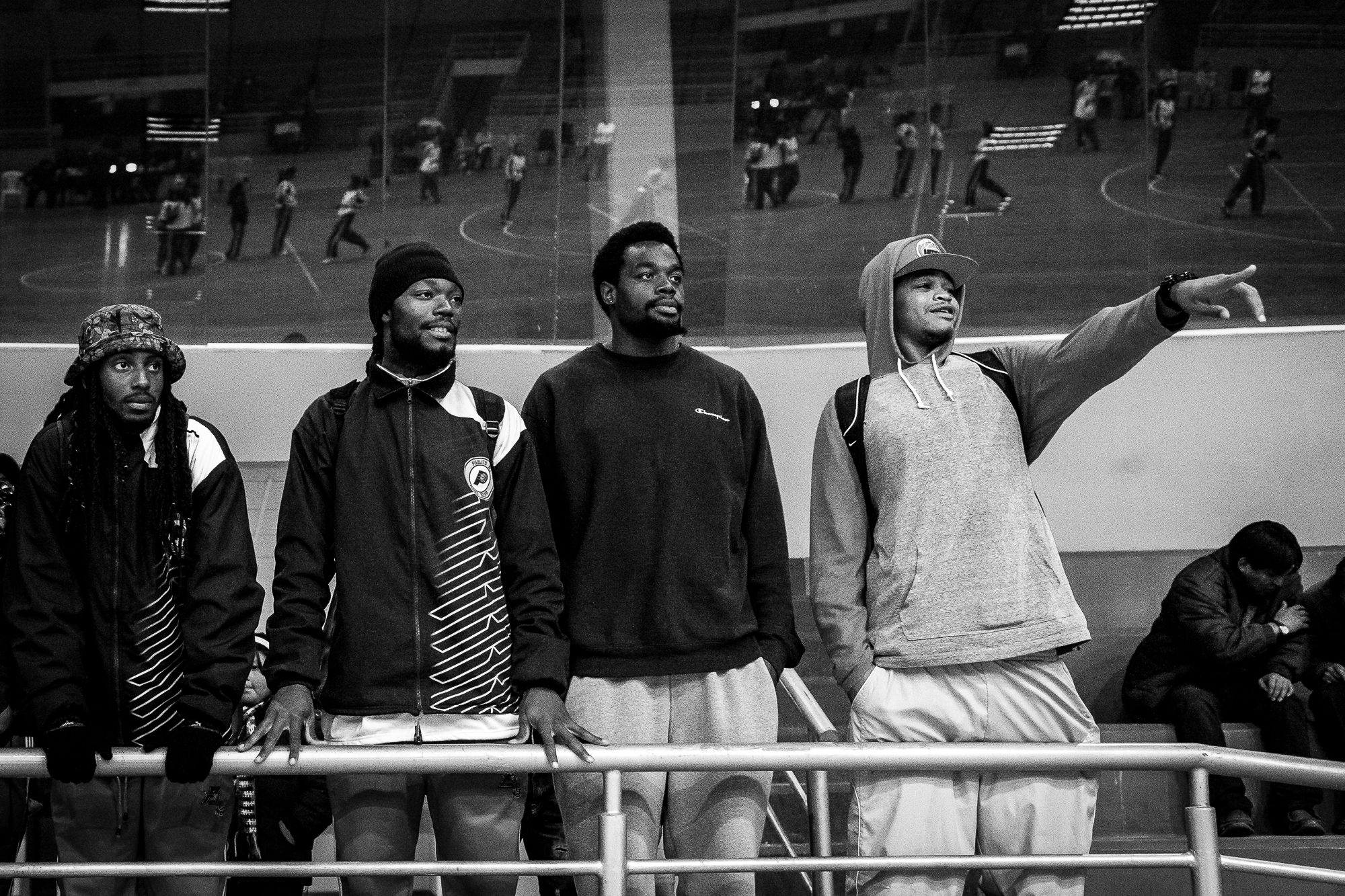
Domonick Steverson, Travis Dupree, DeQuan Massey, and Rory Miller watch a female basketball team play before their own game against the Nusevic team.
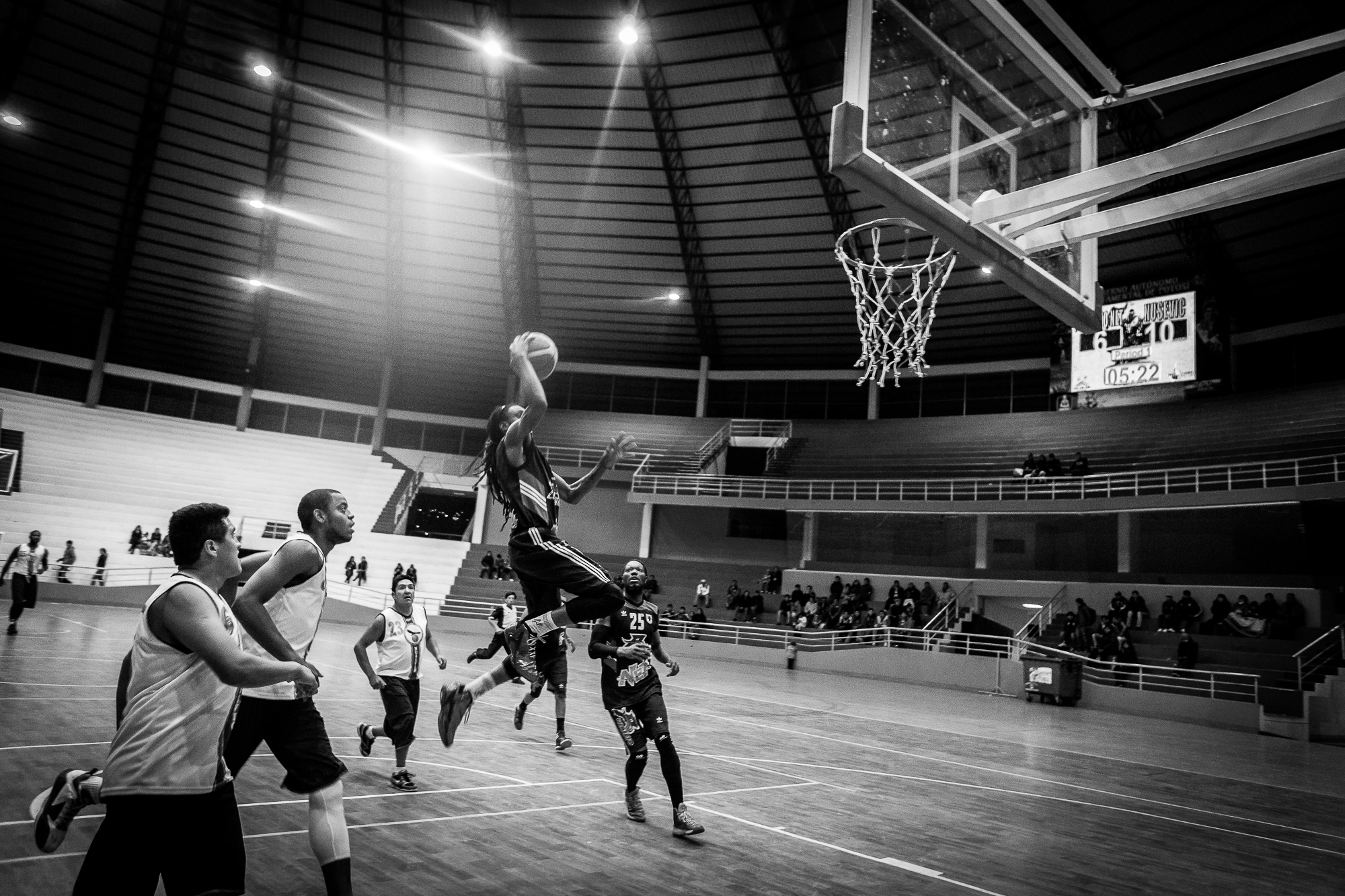
Domonick Steverson flies to the basket during the game against the Nusevic team. Following the trend set by the Pueblito Nets, Nusevic also added three American players to their roster.
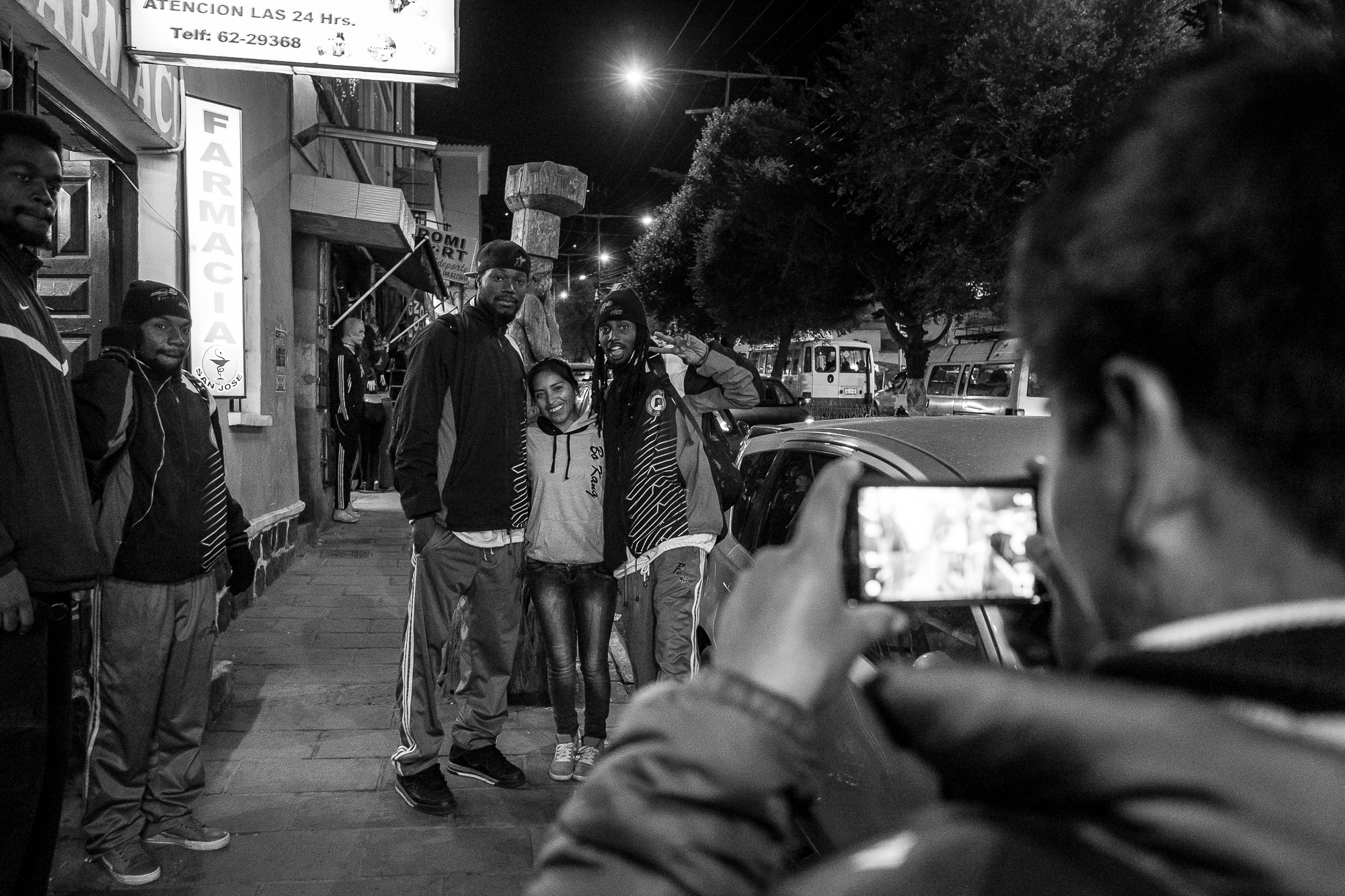
A girl asks to take a photo with Travis Dupree and Domonick Steverson as they head to a game in Potosí. American players are always recognized on the streets and have many fans.
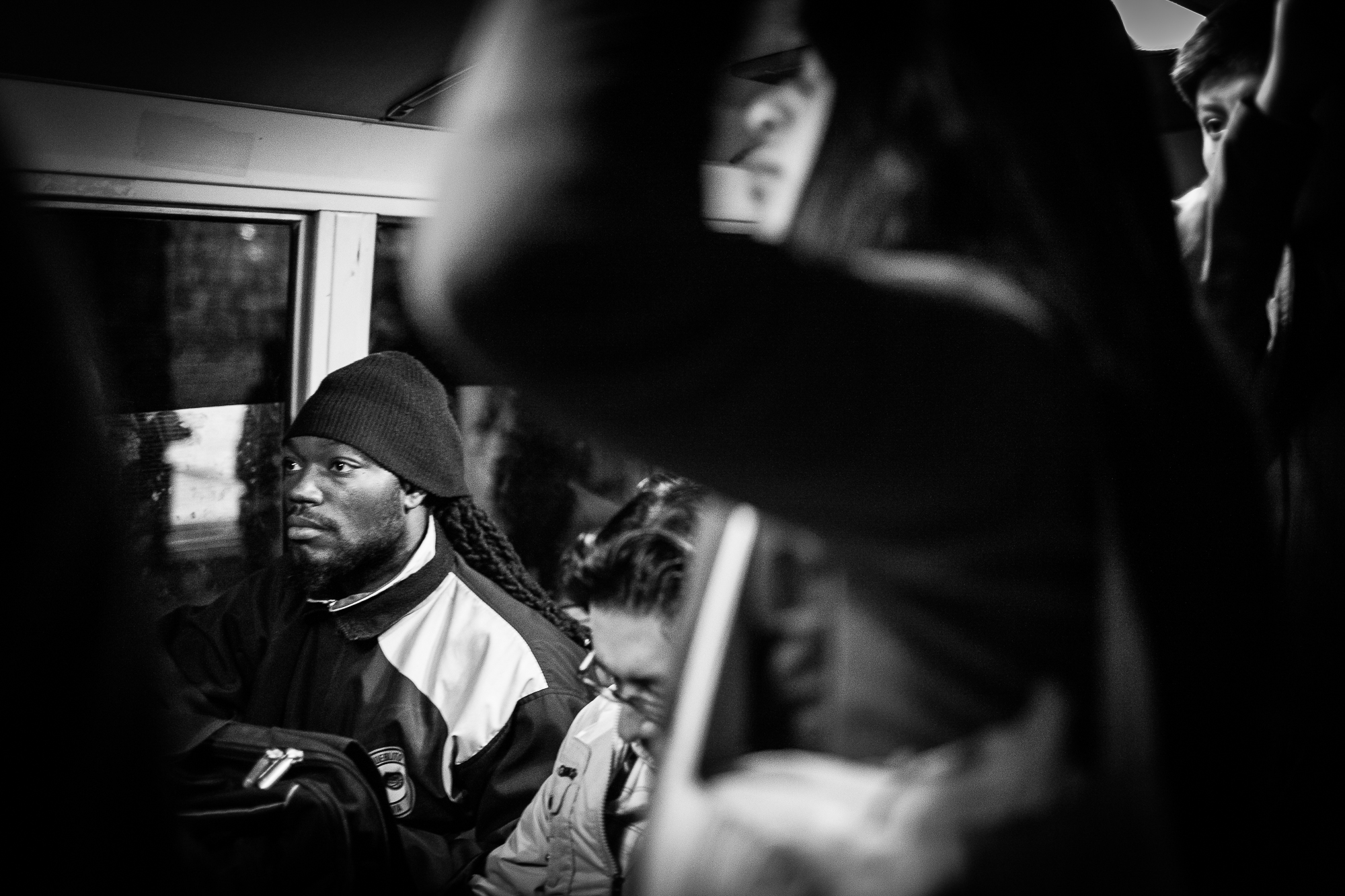
Travis Dupree on a packed mini-bus on his way to a game against the Nusevic team.
How did you first learn about American basketball players in Bolivia?
Actually, this was one of those stories that come to you. I was in Potosí, in a burger joint, eating, and these five big Americans came in and sat at the table next to me. I was eating, they were eating, and suddenly we started talking.
They asked me what I was doing there. I was traveling between assignments in Argentina and Bolivia. At first, I thought they were tourists, but it turned out they were basketball players in Potosí. They told me a bit of their story, and right away, it was something I wanted to work on. I asked if I could follow and document them for a few days. They were very happy to do it.
What was it specifically that interested you about the story?
At the time I was working with Roads and Kingdoms, which does stories that are a bit out of the norm, and I was really struck by the idea of American basketball players in Bolivia. I didn’t even know there was a basketball culture there. These guys seemed completely out of place—like aliens—and that’s what made it so interesting.
Bolivians are generally shorter, and they dress more traditionally. And then you have these big African-American guys from New York, dressed as if they’re still back home. They stood out. It was already incredibly striking visually, and then there’s all the background, too. It had all the ingredients of a great story.
I don’t follow NBA basketball much these days, but I used to as a teenager, especially when Michael Jordan was playing. The dream for these guys is to go to college and make it to the professional leagues. But we only hear about the success stories–those who make it to the NBA. What about those who played in college and then suddenly disappeared? Where did they go?
These guys just wanted to play basketball, so their chance was to go to Bolivia—and they took it. That was also very interesting to me: what happens to players who don’t make it to the big leagues. And of all the countries—Bolivia, with all the geographic conditions. Potosí is one of the highest cities in the world. At over 4,000 meters high, it is difficult to breathe, much less play sports.
I didn’t even talk with the editors; I went straight to shooting because I was sure someone would pick the story up.
That was what appealed to me as well: we rarely hear about players who don’t make it big but stay deeply committed–going to great lengths just to keep playing. And then there’s the idea that America isn’t the only market.
I’m originally from Portugal, and we have American basketball players who play on professional teams. In Bolivia, however, there’s no real professional league—at least not in the same sense. These guys were playing in the second division—in Bolivia! So I really wanted to know how they ended up there.
They were all recruited, right?
Yes. Basically, there was this guy, Carlos Mamani, but everyone calls him Pueblito, who’s a massive basketball fan. He set up his own team, and they were working their way up through the ranks. He wanted to develop the team faster, so he decided to use his connections in the U.S. to bring a few players over and help move the team forward in the leagues. And it starts with just one player going, and then that one brings others.
The Americans were the only paid players in the league. All the others played for fun because it wasn’t a professional league. I understood why they came—they had the opportunity to play, which they didn’t have in the U.S. And they were a huge success. They were earning about US$1,200 a month, which in the U.S. is nothing, but in Bolivia, it’s a very decent salary. They were able to live pretty well too; they had accommodations and even a translator to be with them at all times.
There’s so much contrast in the story both visually and culturally. Can you talk a little bit about how you went about capturing that?
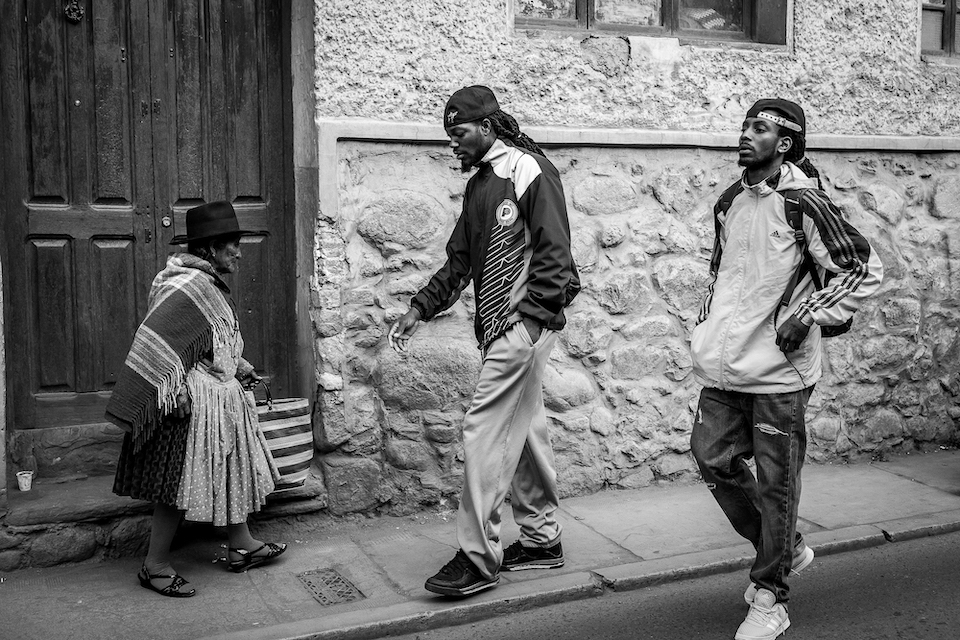
There’s an image in the series of a cholita walking in one direction and the players in the opposite direction that really captures the clash between these two cultures. In a way, even though we were in Bolivia, when we were on the court, it could have been anywhere in the U.S. That’s where the players felt at home.
The contrast outside was obvious—everywhere we went, people stopped and looked at them, wondering, “What the hell are they doing here?” If they were in Europe it would have made a difference, but in Bolivia, they really stood out.
What was that like for the players?
They loved it! You have to understand that in the U.S., they were just average players or guys with a dream to play. And then suddenly they go to Bolivia, and they are like lighthouses walking on the streets, with everyone looking up at them, amazed by their size.
In the beginning, the players said it was very difficult to adapt to the realities of Bolivia—the climate, the altitudes, and even the game. For two weeks, they couldn’t play. Their bodies had to adapt to the pressure of altitude and the lack of oxygen. Some of them were actually questioning their decision: “What am I going to do with my life? I came here and I cannot even walk. How am I going to play basketball?”
But once they started playing, people were crazy about them. Wherever they went they were asked for photos or to sign balls. They had celebrity status—but in Bolivia, with a very different crowd, which again was very interesting. And obviously, they loved that because they were recognized.
The funny thing is that in the beginning, the Bolivian players expected the Americans to do all the work. So, they’d pass them the ball and expect them to “do their thing.” The American players complained about that because basketball is a team sport.
The big moment in the game was when they’d dunk. Bolivians can’t dunk because they simply don’t have the height to reach the hoop. So it was amazing to see them run the full length of the court, and the audience—everyone, from their own teammates to those on the opposing team—chanting, “Do it!” Because you just don’t see dunks in Bolivia, only on TV.
The other thing that really stood out for me in the series is the camaraderie between the players. We see moments of intimacy and unity. What were those relationships like?
I’ve been living abroad for over 20 years, and you tend to mingle more with people who share your background, people you can relate to. I think it was the same thing for these guys. They are alone in a country that they’ve never even dreamed about going to.
They told me they didn’t even know about Potosí. They didn’t know about high altitudes. All they saw was an opportunity to play basketball, and that’s all that mattered.
When you arrive in a place that feels so foreign and find others in the same situation—who speak your language—you develop a sense of community. And I think it became a kind of brotherhood.
Some of the players lived together, some in different houses, but they were very close. They ate together and hung out at each other’s houses.
Since this wasn’t a true professional league with daily practices, on their days off they’d find schools with courts and play casually as friends.
There’s not much to do in Potosí, so with plenty of free time, they’d often spend hours playing video games. I loved that they were always challenging each other, and even set penalties. If you lost, you had to lift weights or do push-ups. It turned into its own kind of competition. But beyond that, they had a strong sense of community.
The other thing is that when they were not together, they were on the phone talking to someone back home. They were so far away from home and looked for what was familiar to them. And, in this case, it was the other basketball players. Even if one was from New Jersey, New York, or Mississippi, they all had something in common: they were Americans, they were in a foreign country, and they all played basketball. They became a family away from home.
Did the players ever assimilate?
No. A lot of them did not stay for extended periods. Most left after one or two seasons because it’s very difficult.
I know Travis Dupree, with whom I kept in closer contact, got an opportunity to play in a U.S. league after Bolivia. The point was never about being abroad or financial gain—it was always about being able to play basketball, about not stopping. As an athlete—and I’m not a professional athlete, but I do lots of sports—I feel that when you stop, it’s much harder to get back on the horse.
I think for them, the alternative was: okay, I could stay in the U.S., get another job that makes more money, and play basketball on weekends with friends, but not train professionally or have that same level of competitiveness.
They all had the dream, and they wanted the game. If it meant that they had to be in another country, they’d do it. But their main goal was to play basketball and maybe one day make it.
You talked about the sense of alienness or otherness in a place. I’m thinking now of your other projects—Transpose Zakarpattia, about displaced refugees in western Ukraine, and The Outcasts, about deported U.S. immigrants returning to a place they hardly know. Would you say that sense of being out of place is an underlying theme in your stories?
Yes. I tend to focus on stories about people who don’t quite belong. It’s not that people don’t belong somewhere—I believe people belong everywhere as long as they’re happy and feel purposeful—it’s more that circumstances make it so they’re not supposed to be there, like the American basketball players in Bolivia or the wrestling cholitas.
We can’t imagine a woman with seven layers of skirts wrestling, or, for example, being in politics. In our Western minds, when we look to congressmen or MPs, we expect to see people in suits. Obviously, that story—Cholita’s Rise—has many more layers. It’s the same thing in Ukraine; those people were not supposed to be there, but there’s always a reason why this is happening.
So I tend to look for people that society doesn’t want to exist or society tells us that they are not supposed to—but they do exist. You see that in Azoreans of the Sea, which documents women in the fishing industry.
It’s funny that you ask this question because I follow stories out of curiosity. Many photographers say the camera is a passport to different worlds. When I met the basketball players in Bolivia, I wanted to know more about them. Photography allows me to get to know people, to spend time with them.
Originally, I went to Bolivia to cover a presidential election. I knew a few photographers who had photographed the wrestling cholitas, but I really wanted to know more about these women. I didn’t even care if I sold the story. Photography was my passport to hang out with them and understand why they do what they do. And one thing led to another.
One day I was hanging out with one of the women in a coffee shop, and she told me, “You know Eduardo, like 10–15 years ago I was not able to sit in this coffee house with you because I was not allowed to enter.“ That was the start of the next chapter—the Cholita’s Rise story. I was looking at cholitas in society, digging and understanding what they went through. I was curious, so I kept exploring.
Or maybe it’s a reflection of me having lived abroad for over 20 years. I’ve been to many places, and now I live in China. I’m completely lost in translation, and I feel a bit outside of my own place.
Eduardo Leal is a Portuguese documentary photographer focusing mainly on Southeast Asia. Previously, he worked for several years in South America and is currently based in Macau S. A. R., China. A graduate in journalism from Escola Superior de Jornalismo in Porto, Portugal, he holds a master’s degree in photojournalism and documentary photography from the London College of Communication and attended the XXVIII Eddie Adams Workshop in New York.
From 2009 to 2014, Eduardo was a consultant to The Arpad A. Busson Foundation. He was responsible for the Cuban in Revolution photography collection and was part of the curatorial team for the exhibitions at the International Center of Photography (ICP) in New York in 2010 and at the Garage CCC in Moscow in 2011. He also contributed to the editorial and design team for the book Cuba in Revolution, published by Hatje Cantz in 2013.
His work has been published internationally in outlets such as The Washington Post, Time, Al Jazeera America, CNN, Bloomberg, AFP, Stern, The Wall Street Journal, The Christian Science Monitor, The Guardian, Dagens Nyheter, Svenska Dagbladet, Aftonbladet, Die Presse, Courrier International, Terra Mater Magazine, Greenpeace Magazine, Mashable, Wired, VQR, Roads & Kingdoms, Doc!, and British Journal of Photography, among others.
